If you’re reading this right now because something just happened at your place of business: take a breath. I am truly sorry you’re going through this. Whether it was a break-in that took a violent turn, a sudden medical emergency, or an incident tucked away in a restroom or stairwell, I know exactly what’s racing through your mind.
The second a space is cordoned off as a crime scene, your role changes. You aren’t just a manager or an owner anymore. You’re the person everyone is looking to for safety and answers. It’s no longer about a “cleanup”. It’s about managing liability, protecting your team’s mental health, and figuring out how to open those doors again without putting a single soul at risk. You don’t have to carry that alone.
Key takeaways
- Do not assign cleanup to staff or standard janitorial teams. If blood or other potentially infectious material is involved, this becomes a workplace safety issue under OSHA’s bloodborne pathogen framework.
- “Looks clean” isn’t the same as “safe.” Porous materials (carpet, padding, drywall, unfinished wood) can trap contamination and odor.
- A reputable company provides documentation. Photos, reports, and itemized invoices help support insurance and property records.
- Insurance coordination is possible. Spaulding Decon’s National Accounts team works with insurance providers and can support direct billing workflows when established.
- You don’t have to figure this out alone. Spaulding Decon offers 24/7 assistance, same-day response messaging, and a free same-day estimate.
A Non-Negotiable Safety Note
I’m going to be very direct with you: Please do not try to clean blood or bodily fluids yourself. This isn’t me being dramatic or trying to sell a service. It’s about the very real risk of infectious diseases and the “invisible” contamination that a mop and bucket simply can’t handle. The moment you see blood or biohazards, your only job is to cordon off the area and keep people out.
I also know exactly what you’re thinking: “We’ll just have the janitorial crew or the maintenance guy handle it.” I am asking you, for their sake and yours, please don’t. Most commercial cleaning crews aren’t trained or equipped for biohazards. When an untrained person attempts this, they often end up spreading the contamination further through the HVAC system or across floors, creating a much larger (and more expensive) liability for your business. Let the professionals carry that risk so your team doesn’t have to.
What’s Really at Stake (It’s More Than Just a Mess)
In a commercial setting, the damage from an incident isn’t always something you can see with a flashlight. While the emotional weight on your team is heavy enough, as a business owner, you’re suddenly facing a “hidden” checklist of complications that can haunt your property if they aren’t handled right the first time.
We aren’t just talking about a stain on the carpet; we’re talking about:
- The “Invisible” Map: Biohazards don’t stay on the surface. They seep into floor seams, hide behind baseboards, and settle into grout lines. If it’s in the subflooring, a standard cleaning won’t touch it.
- The Memory of the Event: Odors are powerful. If a space isn’t remediated at a molecular level, lingering smells can become a permanent, painful reminder of the incident for your staff and customers.
- The Paper Trail: Property managers and insurance adjusters don’t just want the area clean. They want proof. You need meticulous documentation to protect your reputation and your bottom line.
- Trust and Retention: If your employees or tenants don’t feel safe coming back to work, your business can’t recover. Closing the doors is expensive, but losing your reputation because of a botched cleanup is worse.
This is exactly why we do what we do at Spaulding Decon. Professional remediation isn’t just about aesthetics. It’s about restoring the integrity of your building and the trust of the people inside it.
Defining the Work: Restoration vs. “Cleaning”
I want to be very clear about what we do, because there is a dangerous misconception that crime scene cleanup is just an intensive version of janitorial work. It isn’t.
Crime scene cleanup is a specialized medical-grade remediation. Our goal isn’t just to make the room look better. It’s to restore the space to a safe, usable condition the moment the authorities release the scene.
Here is what you need to know:
- It’s not a “deep clean”: You can’t solve a biohazard situation with a stronger mop or industrial bleach.
- It’s not an “improvisation”: This isn’t the time for household supplies or “seeing what works.” If it isn’t handled with specialized equipment, the risk remains.
- It’s about science, not just scrubbing: We use specific protocols to neutralize pathogens that the naked eye can’t see.
At Spaulding Decon, we’ve been doing biohazard remediation since 2005. My team consists of licensed, background-checked professionals who are trained to handle the stuff most people can’t (or shouldn’t) ever have to see. We’re available 24/7 because we know that when your business is on the line, every hour counts. We don’t just clean up; we restore your peace of mind.
Your “Right Now” Checklist: How to Regain Control
Once the police tape comes down and the investigators leave, the weight of the situation usually hits all at once. Before you do anything else, I strongly advise you to follow these steps. Do not touch anything. Just follow this roadmap to protect yourself and your business.
- Seal the Perimeter: Immediately restrict access. Lock the doors, post “Authorized Personnel Only” signage, and keep employees, customers, or tenants well away from the area. This isn’t just for safety; it’s to prevent anyone from accidentally tracking contamination into “clean” parts of the building.
- Freeze the Scene: Do not move furniture, do not wipe down desks, and do not throw anything in the trash. You might think you’re helping, but you could be disturbing biohazards or complicating your insurance claim.
- Document from a Distance: Take photos of the area, but keep your distance. You don’t need “graphic” shots. You need a record of the affected rooms and the date for your insurance and property files.
- Alert the Chain of Command: Notify your stakeholders (whether that’s corporate leadership, building management, or your insurance provider). The sooner they are in the loop, the sooner they can support your recovery.
- Call in the Specialists: When you call a cleanup team, listen to how they talk. You want a company that explains containment and waste handling in plain English, not industry jargon. You deserve to understand exactly how your building is being made safe again.
If you’re standing there right now wondering where to start, give us a call. At Spaulding Decon, we provide 24/7 assistance and can usually get a team to you for a free estimate the same day. We’ll handle the science and the safety so you can get back to being a business owner.
Why You Shouldn’t Ask Your Staff to “Handle It”
I’ll say this as plainly as I can: Don’t put your employees in that position.
It’s tempting to look at a mess and think, “The janitorial crew can have this knocked out in an hour.” But when blood or infectious materials are involved, you aren’t just asking for a cleaning job. You’re asking your staff to step into a biohazard zone.
Legally, OSHA has very strict rules (specifically the Bloodborne Pathogens Standard (29 CFR 1910.1030) regarding how workers must be protected. Unless your team has medical-grade PPE, specialized training, and a hepatitis B vaccination program in place, you are opening your business up to massive liability.
But beyond the legalities, there’s the human element. Willingness doesn’t reduce risk. Even if an employee offers to help, they don’t know how to track “odor pathways” or handle porous materials that have soaked up contaminants.
Professional teams are brought in to be your shield. We provide:
- The “Invisible” Protection: We use controlled work zones and high-end PPE so the rest of your building stays safe.
- Deep-Level Remediation: We go into the seams, the subflooring, and the cracks where bacteria hide.
- A Professional Buffer: Our technicians are trained to work with total discretion and compassion. We handle the heavy lifting so your employees can focus on healing and getting back to work.
The “Visual Clean” Trap: Why What You Can’t See Matters Most
In my years doing this, I’ve seen it a thousand times: a business owner thinks the problem is gone because the floor looks shiny again. But in a commercial building, contamination isn’t polite. It doesn’t stay on the surface waiting for a mop.
Blood and biohazards are opportunistic. They find their way into carpet fibers, migrate under baseboards, and seep into the tiny expansion joints between flooring. If it reaches the subflooring or the drywall, a surface wipe-down is essentially just putting a band-aid on a broken bone.
If you stop at “visually clean,” you’re leaving your business vulnerable to:
- The Ghost of the Incident: Persistent odors that seem to disappear and then roar back the moment the HVAC kicks in or the humidity changes.
- Structural Contamination: Biohazards trapped in porous materials can rot or grow bacteria, leading to much bigger (and more expensive) problems down the road.
- The “Customer Catch”: Nothing destroys a brand faster than a customer noticing a stain or a smell that your cleaning crew missed. That’s a reputational hit you might never recover from.
A responsible remediation plan doesn’t start with a bucket. It starts with an investigation. We track where the fluid traveled, not just where it landed. We don’t stop until the space is biologically safe, not just “clean” to the naked eye.
Real-World Example: When contamination goes deeper than it looks
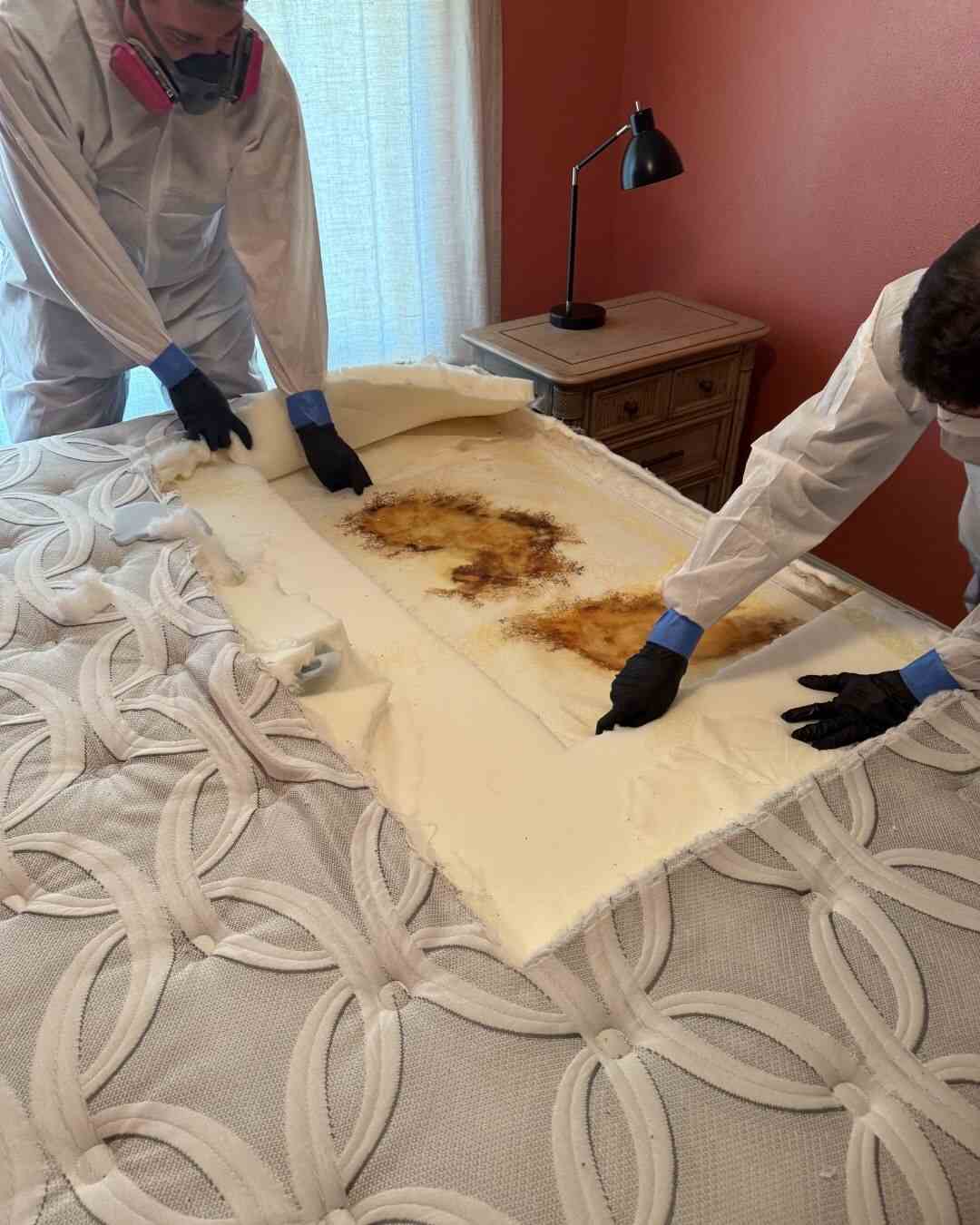
In a real decomposition cleanup, our team found saturation beyond the obvious area: the mattress, carpet, and subfloor all needed targeted removal and treatment. For professional verification, we used ATP testing (to check bacterial levels) and an indicator chemical that reacts on contact with remaining bodily fluids. Read the full walkthrough: What Happens After the Police Leave? Inside a Decomposition Cleanup (Real-World Example).
Behind the Scenes: What Real Remediation Looks Like
I get asked for a “cleaning checklist” all the time. People want to know what they’re paying for and what competent work actually looks like. While this isn’t a DIY manual, here is the high-level roadmap we use to bring a property back to life.
- The Tactical Assessment: We don’t just walk in and start scrubbing. We map out the “splash zone,” identify compromised materials, and coordinate with your security or property manager to make sure our work doesn’t disrupt your entire operation.
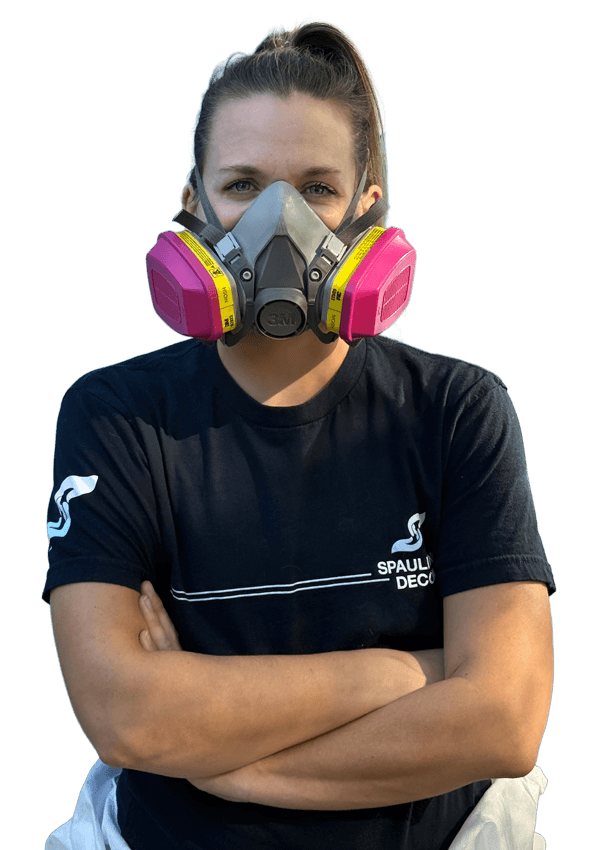
- Establishing Control Zones: Before a single tool comes out, we set up containment. We use medical-grade PPE and site controls to ensure that not a single microscopic particle leaves the affected area.
- Surgical Removal: If a biohazard has soaked into drywall or subflooring, you can’t “clean through it.” We remove the impacted materials entirely. It’s the only way to be 100% sure the risk is gone.
- Professional Disinfection: We use proprietary, industry-grade chemistry to neutralize pathogens. This goes way beyond “clean”. It’s about biological safety.
- Molecular Odor Control: We don’t mask smells with perfumes. We treat odor at the source so that when we leave, the air is neutral and safe.
- Certified Waste Disposal: You can’t just throw biohazards in a dumpster. We handle the legal routing and disposal of all hazardous waste so you never have to worry about a fine or a safety breach.
- The Paper Trail (Verification): When we’re done, we don’t just wave goodbye. We provide the documentation you need for insurance, health inspectors, and your own peace of mind.
The Industry Standard: We follow the ANSI/IICRC S540, which is the gold standard for trauma and crime scene cleanup. If the company you hire doesn’t know what that is, hang up the phone.
Real-World Video Example: Want to see what professional scene work looks like in practice: PPE, containment, removal, and responsible disposal? Watch Episode 4: Double Decomp on our Crime Scene Cleaning channel.
Navigating the Insurance Maze (You Don’t Have to Do This Alone)
I know exactly where your head is right now: “How much is this going to cost, and how much of a headache is the insurance claim going to be?” It’s a valid fear. When you’re trying to reopen your doors, the last thing you want to do is fight with a claims adjuster over line items.
That’s why we’ve built a National Accounts team specifically to bridge the gap between the incident and the payout. We don’t just clean; we document.
Here is how we take the weight off your shoulders:
- Direct Communication: Whenever possible, we work to establish direct billing with your provider so you aren’t stuck playing middleman.
- The “Proof” Package: We provide the digital photos, itemized invoices, and detailed reports that adjusters actually want to see. When we hand over our documentation, there’s no room for “gray areas.”
- Rapid Response: Insurance companies (and your bottom line) hate delays. We are available 24/7 and can typically be on-site within 24 hours to mitigate damage before it gets worse.
- The Reality Check: Every policy is different, and coverage depends on your specific plan. The best thing you can do right now is document everything and call your carrier. We’ll be right there beside you to provide the professional documentation they need to move your claim forward.
The handoff: How to know the job was actually done right
It’s a fair question, and frankly, it’s one you should be asking. When you’re the one telling your employees it’s safe to come back to work, you need more than just a “trust me” or a “looks fine to me.” You need proof.
In our world, “clean” is a scientific measurement, not a visual opinion. Here is how we verify that your space is truly restored:
- Scientific Verification: Depending on the situation, we use reactive technology that reveals biological contamination the naked eye can’t see. If anything is left behind, these tools flag it immediately so we can address it.
- Specialized Testing: For complex scenes like meth-related incidents or chemical exposures, we don’t guess. We test. We use verified data to confirm the area is cleared.
- The Handoff Package: A reputable provider never just packs up and leaves. You should expect a full documentation package including “before and after” photos and a written report of every step we took.
When we hand you those files, you aren’t just getting a receipt. You’re getting the peace of mind that comes from knowing you’ve fulfilled your duty of care to your team and your tenants. You can look them in the eye and say with 100% certainty: This space is safe.
Setting Expectations: What’s in the Scope?
I believe in being 100% transparent with my clients. When you’re in the middle of a crisis, the last thing you need is a “surprise” about what a service does or doesn’t cover. Biohazard remediation is a specialized medical-grade process, and it’s important to distinguish the cleanup from the reconstruction.
What we handle (The “safe again” phase)
Our primary mission is to eliminate the danger. This includes:
- The Tactical Plan: We don’t wing it. We follow a controlled remediation plan tailored to your specific building layout.
- Containment: We use medical-grade PPE and site controls to ensure the “red zone” doesn’t spread to your lobby or breakroom.
- Deep Remediation: We clean, disinfect, and neutralize odors at the molecular level, and we remove any materials (like saturated drywall or insulation) that simply cannot be saved.
- The Paper Trail: You’ll get the photos, reports, and itemized invoices you need to satisfy your insurance carrier and your legal team.
What’s usually separate (The “back to normal” phase)
Remediation is about safety. Restoration is about aesthetics. Unless we’ve specifically added a “build-back” scope to your project, the initial cleanup doesn’t typically include:
- Replacing stolen or damaged inventory.
- Fixing vandalism that isn’t a biohazard (like broken windows or graffiti).
- Major rebuilding, such as painting, new carpeting, or structural repairs.
The Spaulding Advantage: Because we also offer comprehensive property restoration (covering water, fire, and storm damage), we can often bridge that gap for you. We can move seamlessly from cleaning up the crisis to rebuilding the space, saving you the headache of managing three different contractors.
Frequently Asked Questions
I know you have a lot on your plate right now. Here are the questions my team and I hear most often from business owners in your shoes.
I’m going to be very blunt: Please don’t. If there is blood or any potentially infectious material, asking untrained staff to touch it isn’t just a safety risk. It’s a massive legal liability. OSHA’s Bloodborne Pathogen standards are there for a reason. You wouldn’t ask a janitor to fix a high-voltage electrical panel so don’t ask them to handle a biohazard. A qualified professional is the only safe route.
You should expect any competent vendor to follow a disciplined process:
1. Assessment
2. PPE/Containment
3. Material Removal
4. Disinfection
5. Odor Remediation
6. Legal Waste Disposal
7. Final Verification
If they can’t explain and document these phases, they shouldn’t be on your property.
In many cases, yes but it depends entirely on your specific policy and the nature of the incident. My team specializes in providing the exact “proof” packages (photos, itemized reports, and logs) that adjusters need to move a claim forward. Your best move is to document the scene from a distance and call your carrier immediately. We’ll handle the technical details they ask for.
We understand that in business, your reputation is everything. The last thing you want is a “crime scene” headline. That’s why we use discreet vehicles and maintain strict confidentiality. Our goal is to get in, get the job done, and get out without drawing unnecessary attention to your front door.
Get Help Now
If your business is dealing with the aftermath of a crime or biohazard situation, you don’t have to navigate it alone. Spaulding Decon provides compassionate crime scene and biohazard cleanup plus property restoration, with nationwide coverage and multiple U.S. locations.
24/7 assistance
Same-day response messaging
Free same-day estimate
Find a location
Crime Scene Cleanup
Biohazard Cleanup
Insurance Providers