
Available 24/7, free and confidential. If there is immediate danger, call 911.
This article is for families who have experienced a loss to suicide and need to understand what comes next — emotionally, practically, and logistically. It is informational and does not replace professional mental health advice.
About The Author
Laura Spaulding is the Founder and CEO of Spaulding Decon, with more than two decades of hands-on experience in biohazard remediation and crime scene cleanup after a career in law enforcement. Her team has supported hundreds of families through the immediate aftermath of a suicide loss across the US.
Losing someone to suicide is unlike almost any other kind of loss. The shock, the questions, and the grief can arrive all at once, alongside an overwhelming list of practical decisions that need to be made immediately. If you are in that moment right now, you do not have to navigate it alone.
More than 720,000 people die by suicide worldwide each year (World Health Organization – WHO), and each of those deaths touches an estimated 135 people who knew them. In the US, suicide is a leading cause of death across several age groups, accounting for more than 47,000 lives lost annually (CDC, 2023).
At Spaulding Decon, we’ve worked alongside families in the immediate aftermath of a suicide loss for over two decades. We handle the practical side, from scene coordination and biohazard remediation to logistics, so families can focus on each other.
This article explains what happens after a suicide loss, what the emotional and long-term effects on family members can look like, and where to find genuine support.
Immediate Steps for Families After a Suicide Loss (First 24–72 Hours)
Do not attempt to clean the scene yourself. Biohazard risks require professional-grade PPE, specialised training, and regulated disposal. This is not a safety precaution — it is a legal and health requirement.
Checklist: What to do right now
In the first hours after a loss, the NIMH recommends these steps:
- Call emergency services if needed and accept guidance from law enforcement. Do not disturb the scene until they release it.
- Do not attempt cleanup. This is the most important practical instruction. Blood and bodily fluids carry serious biohazard risks. Professional biohazard remediation is legally required and it protects you from secondary trauma as well as physical harm.
- Identify one trusted person to manage logistics (insurance calls, pet care, notifications to school or employer).
- Contact your insurance company early, even before cleanup is arranged, to document the loss and open a claim.
- Reach out for emotional support. 988 Loss Survivors, AFSP loss resources, and your local faith or community network are all good first steps.
- When law enforcement releases the scene, contact a professional biohazard remediation company before re-entering.
- Contact a professional remediation company. Once law enforcement releases the scene, do not re-enter it yourself. Contact a certified biohazard cleanup team before anyone else goes in.
What law enforcement handles (And what they don’t)
Police and coroners secure the scene, investigate the circumstances, and manage safety. Once their investigation is complete and the scene is formally released, their involvement ends.
Scene cleanup is not their responsibility. That responsibility falls to the property owner or, if the property is rented, often to the landlord, though state victim compensation programs and certain insurance policies can help with costs.
Scene release timelines vary. In straightforward cases it can be 24–48 hours. In complex investigations it may take longer. Until the scene release, limit access to the space entirely, not just for safety reasons, but because disturbing evidence can complicate the investigation.
Scene release: When your family can re-enter the space
Only after law enforcement formally releases the scene and a professional biohazard remediation team has completed their work and confirmed the space is safe.
This is not a guideline. It is a genuine health requirement.
Biohazard contamination is not always visible to the eye, and the presence of bloodborne pathogens cannot be determined without professional assessment.
Emotional & Psychological Effects of Suicide on Family Members
Grief after a suicide loss tends to be more complex than grief after other types of death. Research consistently shows that suicide loss survivors experience higher rates of guilt, shame, anger, and social isolation than people bereaved by other causes. These responses are normal and they are survivable.
Grief that feels different: Complicated Grief and Prolonged Grief Disorder (PGD)
Prolonged Grief Disorder (PGD), formerly called complicated grief, is a clinically recognised condition in which intense grief persists well beyond the expected period and significantly impairs daily functioning.
Studies published in PubMed Central suggest that suicide loss survivors are at elevated risk for PGD compared with other bereaved individuals.
Signs that grief may have become PGD include:
- Persistent difficulty accepting the loss
- Feelings of meaninglessness or emptiness that don’t ease over time
- Inability to engage with positive memories of the deceased, and
- Significant functional impairment (work, relationships, daily tasks).
If these symptoms persist beyond six months and are causing real disruption, a mental health professional should evaluate for PGD specifically, not just general depression. Effective, evidence-based treatments exist for PGD and work differently from standard grief counselling.
Effects on immediate family (Partners, parents, siblings)
The experience of suicide loss varies significantly depending on your relationship to the person.
Partners and spouses often report intense guilt and a sense of missed warning signs. Parents frequently struggle with questions of blame, wondering what they could have done differently.
Siblings may feel the grief is disenfranchised, or that their own distress is secondary to their parents’.
There is no hierarchy in grief after suicide. Each relationship carries its own weight, and all deserve support.
Long-term effects on family members
Research indicates that the long-term effects of suicide loss on family members can include:
- Increased risk of depression, anxiety, and PTSD, particularly in the first year but sometimes persisting for many years.
- Higher lifetime risk of suicidal ideation among family members who have lost someone to suicide, which is one reason that professional follow-up support is so important.
- Family system disruption, including conflict over how to talk about the death, disagreements about memorials, and differing timelines of grief among family members.
- Social withdrawal and stigma. Some families report that friends and extended family don’t know what to say and gradually pull away.
- Financial strain from funeral costs, lost income, mental health treatment costs, and professional remediation expenses.
Note: Long-term effects are not inevitable. With the right support, such as therapy, peer groups, and community, many families emerge from suicide loss with strong coping skills and meaningful ways to honour their loved one.
Effects of suicide on family and friends: The wider circle
The ripple effects of a suicide loss extend well beyond the immediate family. Close friends, colleagues, and community members can experience genuine grief and trauma, even if their loss isn’t always recognised by those around them.
Research estimates that each suicide can affect as many as 135 people who knew the person. Friends may experience survivor’s guilt, shock, and disruption to their own mental health. Peer groups, particularly among younger people, can be at elevated risk in the period after a loss.
Schools, workplaces, and faith communities all have a role to play in recognising and responding to this wider grief.

Effects on children: Age-appropriate support and how to help children understand suicide
Children process death differently depending on their age and developmental stage, and a suicide loss can be especially confusing. Here are core principles:
- Be age-appropriate. Very young children may not grasp the permanence of death. Avoid euphemisms that create confusion (‘went to sleep’, ‘passed away’). Use clear, gentle language.
- Invite questions, then follow the child’s lead. Answer honestly and simply. You don’t have to explain everything at once.
- Reassure the child firmly that they are not to blame. Children are prone to magical thinking. They may believe something they said or did caused the death.
- Maintain routines as much as possible. Predictability offers security in a disorienting time.
- Watch for behavioural changes, such as withdrawal, regression, anger, or sleep disruption that may signal the child needs professional support.
- Seek child-specialist therapy if the child witnessed the scene, had an especially close bond with the deceased, or shows sustained emotional dysregulation. The American Academy of Child and Adolescent Psychiatry (AACAP) has age-specific guidance at aacap.org.
Warning signs that someone may need professional help
Seek professional mental health support if you or a family member experience any of the following, particularly if symptoms are persistent or worsening:
- Depression or sustained low mood
- Anxiety, flashbacks, or PTSD symptoms
- Suicidal thoughts
- Significant sleep disruption
- Sudden changes in weight, appetite, or mood
- Increased use of alcohol, substances, or other avoidance behaviours
Each of these is easier to address early. If you are unsure, reach out to a GP or clinician. They can help you determine whether a referral to a specialist is appropriate.
What the Research Shows: Scale and Impact
Understanding the scale of suicide loss helps explain why the right support structures matter so much for individuals, families, and communities.
- Globally: Approximately 720,000 people die by suicide each year (WHO).
- United States: More than 47,000 people died by suicide in the US in 2022, the 11th leading cause of death overall, and the 2nd leading cause for ages 10 to 34 (CDC, 2022).
- Reach: Each suicide is estimated to significantly affect up to 135 people who knew the person (Cerel et al., 2019).
- Mental health risk: The AFSP reports that family members bereaved by suicide face significantly elevated risk of depression, anxiety, PGD, and PTSD compared with the general population.
- Financial impact: Funeral costs typically range from $7,000 to $12,000. The CDC estimates the total economic cost of suicide to the US, including medical expenses and lost productivity, at approximately $500 billion annually. Individual families also face potential lost household income and professional remediation costs, some of which may be offset by insurance or victim compensation programmes.
Scene Coordination and Cleanup: What Professionals Handle
Do not re-enter the space until law enforcement releases the scene. Do not attempt cleanup. Biohazard contamination from blood and bodily fluids poses serious health risks that require professional-grade PPE, OSHA-compliant exposure control, and regulated waste disposal. These requirements are not DIY-achievable.
Why professional biohazard remediation is required
Blood and bodily fluids are classified as biohazardous materials under OSHA’s Bloodborne Pathogens Standard (29 CFR 1910.1030).
Pathogens including hepatitis B, hepatitis C, and HIV can remain viable outside the body, sometimes for days, on porous surfaces. Biohazard cleanup requires not just cleaning but decontamination, testing, and regulated disposal of affected materials.
Standard cleaning products, even industrial-grade ones available in stores, are not designed or approved for this application. More importantly, the emotional difficulty of the work means that attempting it without professional support can compound trauma significantly.
Our team’s crime scene and biohazard cleanup process follows IICRC S540 standards for trauma and crime scene remediation.
What our team commonly sees at the scene
Over two decades of responding to these scenes, our teams consistently encounter the same realities that families need to be prepared for:
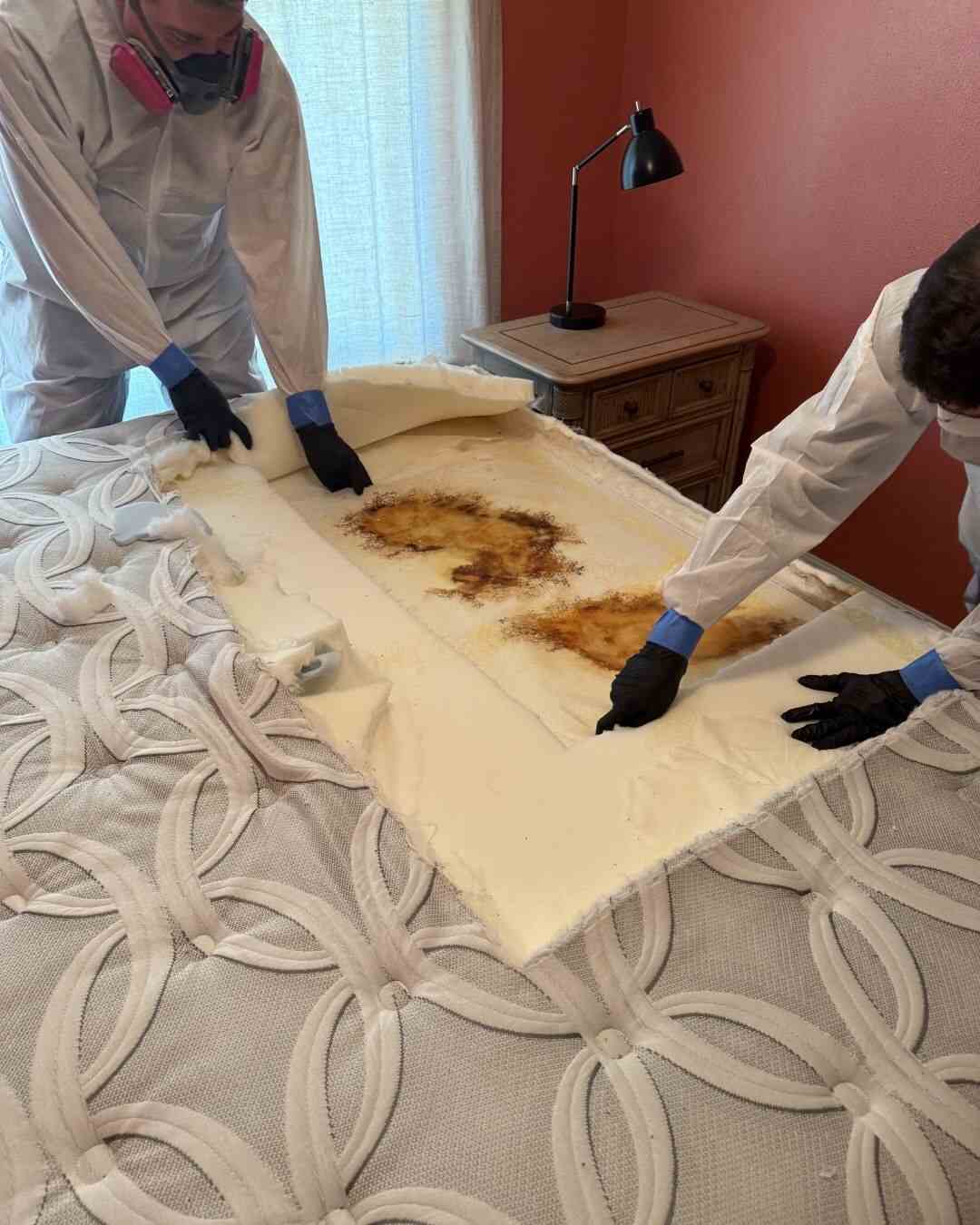
- Contamination often extends further than is visible to the eye. Blood and bodily fluids can seep into flooring underlayment, subfloor, drywall, and structural materials. Such blood cleanup requires professional assessment before disposal decisions are made.
- Porous materials (carpet, mattresses, upholstered furniture, drywall) typically cannot be decontaminated and require disposal under regulated waste protocols. Non-porous surfaces (hardwood, tile, certain laminate) may be restorable depending on the extent of penetration.
- Odour can be a significant and persistent issue, particularly in enclosed spaces or where discovery was delayed. This is not resolved by conventional cleaning or air fresheners; it requires professional odour neutralisation using appropriate equipment.
- Many families are not aware that they should not launder or attempt to salvage items from the scene themselves. This is both a biohazard risk and, in ongoing investigations, a potential chain-of-custody issue.
- Our teams coordinate directly with law enforcement at scene release, which means we’re ready to mobilise the moment access is authorised, rather than the family having to manage that communication.
What happens to personal belongings
Our team handles belongings with care and respect, following a documented process:
- Non-porous items may be decontaminated and returned.
- Porous items with biohazard are disposed of under regulated waste protocols.
- Sentimental items are handled with explicit family consent and chain-of-custody documentation where applicable.
- Inventory list: we provide families with a full itemised list and clear options: return, donate, or dispose. Everything is documented for insurance.
- If an investigation is ongoing, we coordinate with authorities before moving any items.
Common mistakes families make (And what to do instead)
- Attempting DIY cleanup: The most common and most dangerous mistake. Even a well-intentioned effort can result in biohazard exposure and serious re-traumatisation. Call a professional, then limit access until they arrive.
- Discarding items without a professional inventory: Families sometimes remove belongings before our team can catalogue them. This can complicate insurance claims and, if an investigation is ongoing, create legal problems. Wait for professional guidance.
- Waiting too long to call insurance: Coverage decisions can be time-sensitive. Notify your insurer as soon as law enforcement releases the scene even before cleanup begins.
- Not informing the landlord (if renting): If the property is rented, the landlord needs to be notified. They may have their own commercial insurance or remediation resources. A professional remediation company can handle this notification on your behalf.
- Trying to manage everything alone: Designate one trusted person as the logistics point of contact for the first 72 hours. This single step significantly reduces coordination overwhelm.
Need Immediate Help With the Scene?
Spaulding Decon handles biohazard scene coordination, remediation, insurance documentation, and belongings inventory so your family doesn’t have to. We coordinate with investigators and insurers, work discreetly, and protect your privacy.
Navigating Insurance and Financial Assistance
Cost is a real concern, and most families are not aware of the financial pathways available to them.
Does homeowner’s or renter’s insurance cover biohazard cleanup?
Many policies include biohazard or trauma scene remediation under the dwelling or property coverage section. Coverage varies significantly by policy. Key questions to ask your adjuster:
- What is the deductible?
- Are there sub-limits for this type of claim?
- Does the policy exclude intentional acts?
- Can a third-party contractor bill directly to the insurer?
Spaulding Decon works directly with insurance carriers and can assist with documentation to support your claim. We have experience coordinating with adjusters across multiple policy types.
State victim compensation programs
All US states operate victim compensation programmes that can reimburse certain costs for crime victims and their families. This sometimes includes cleanup costs for suicide and unattended death scenes. Eligibility criteria and reimbursement amounts vary by state.
Your state attorney general’s office or the National Association of Crime Victim Compensation Boards (NACVCB) can direct you to the right programme. If a victim advocate was assigned at the scene, which many law enforcement agencies do, they can also help you navigate this process.
How to Support a Loved One After Suicide Loss
The most important thing you can do for a grieving family member is to show up, not with the right words, but with consistent presence. Research on suicide loss survivors consistently identifies social support as one of the most protective factors against prolonged grief and depression.
Supporting someone having suicidal thoughts
If you are concerned that someone in your life is struggling with suicidal thoughts, the NIMH recommends five steps:
- Ask directly. Research shows that asking someone directly about suicide does not plant the idea, it opens the door. Use plain language: ‘Are you thinking about suicide?’
- Be there. Listen without judgment. You do not need to have answers or fix anything.
- Keep them safe. If they are in imminent danger, help reduce access to lethal means (medications, firearms) safely and without confrontation.
- Help them connect. Call or text 988 together. Contact their doctor or therapist. Offer to go with them to an appointment.
- Follow up. Check in regularly in the days and weeks after a crisis not just once.
Online therapy and grief counselling resources
- 988 Suicide & Crisis Lifeline: call or text 988 | 988lifeline.org
- American Foundation for Suicide Prevention (AFSP): afsp.org (loss survivor resources and Find a Support Group tool)
- Alliance of Hope for Suicide Loss Survivors: allianceofhope.org
- NIMH (Find Help’ resource): nimh.nih.gov
- Suicide Prevention Resource Center (SPRC): sprc.org
- For grief-specific therapy, ask your GP or insurer for a referral to a clinician with experience in traumatic loss and PGD.
- For children: the American Academy of Child and Adolescent Psychiatry (AACAP) has age-specific guidance: aacap.org
Need Immediate Support?
If you’re facing this loss, you don’t have to do the logistics alone. We can coordinate with investigators and insurers, remediate safely, and protect your privacy. Spaulding Decon works discreetly and with compassion, we truly respect the story of every life. We offer phone, SMS, and discreet photo review pathways.
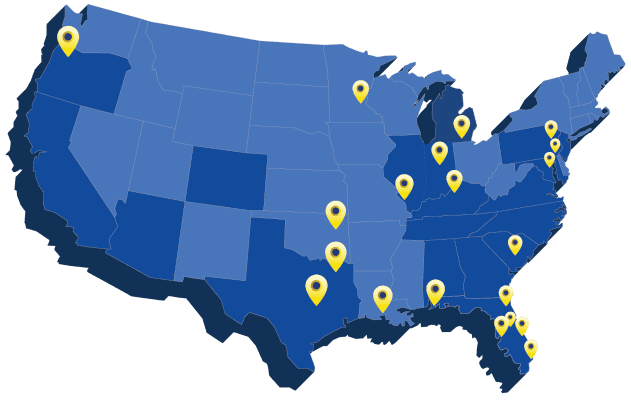
Please contact us today by reaching out to your nearest
Frequently Asked Questions
No. Law enforcement secures the scene and investigates; cleanup is not their responsibility. Once the scene is released, it typically falls to the property owner or landlord. Some state victim compensation programmes and homeowner’s insurance policies can help with professional cleanup costs.
No. Blood and bodily fluids are classified as biohazardous materials under OSHA’s Bloodborne Pathogens Standard (29 CFR 1910.1030). Safe remediation requires professional-grade PPE, specialised training, confirmatory testing, and regulated waste disposal — none of which is available to the public. Attempting cleanup also poses a significant risk of re-traumatisation.
Family members bereaved by suicide face elevated risk of depression, anxiety, PTSD, and Prolonged Grief Disorder (PGD). There is also an increased lifetime risk of suicidal ideation among those who have experienced a suicide loss in their family. Social withdrawal, stigma, family conflict, and financial strain are also common long-term challenges. With appropriate support (therapy, peer groups, community) many families develop strong coping skills over time.
Immediate family members (partners, parents, siblings) often experience the most intense and sustained grief, along with greater stigma and responsibility for practical decisions. Friends, colleagues, and community members can also experience genuine grief, shock, and survivor’s guilt even when their loss isn’t widely acknowledged. Peer groups, particularly among younger people, may be at elevated risk in the period following a loss in their community.
Intense grief, guilt, anger, confusion, disbelief, and social withdrawal are all common reactions. Seek professional mental health support if severe symptoms persist, worsen, or significantly impair functioning. Ask a clinician specifically about Prolonged Grief Disorder (PGD) evaluation and evidence-based treatments, which differ from standard grief counselling.
Follow the NIMH five steps: Ask, Be There, Keep Them Safe, Help Them Connect (call or text 988), and Follow Up. You can also call 988 yourself and ask for guidance on supporting someone else.
A professional biohazard remediation team will assess all belongings. Non-porous items may be decontaminated and returned. Porous items that have absorbed biohazard material are generally disposed of under regulated protocols. Sentimental items are handled with family consent and documented in a full inventory. If an investigation is ongoing, no items are moved until authorities have cleared it.
Many homeowner’s and renter’s insurance policies include biohazard or trauma scene cleanup under dwelling or property coverage but coverage varies significantly. Key exclusions to check: intentional act clauses, sub-limits, and deductible amounts. State victim compensation programmes may also provide reimbursement. Spaulding Decon can assist with insurance documentation and works directly with adjusters.
If you need help after a suicide loss, we can coordinate respectfully with authorities and insurers, remediate safely, and handle belongings with care. Spaulding Decon works discreetly and with compassion, we truly respect the story of every life.